
Womb vs. Uterus: Why the Word You Use Matters
Why the difference between the words womb and uterus matters for your relationship with your body.
Most women have heard the word uterus. Fewer have heard the word womb. And almost none were taught that the difference between them might actually matter.
Uterus is a medical term. It describes an organ: a hollow, pear-shaped muscle in the lower pelvis, approximately 7cm long, responsible for menstruation, pregnancy, and birth. This is accurate. And it is also incomplete.
Womb is something older. It comes from the Old English word “wamb,” meaning belly, hollow space, the inside of something. It carries warmth. It implies life. It points not just to a physical structure but to a living center of the female body.
Same organ. Different relationship.
What changes when you change the word#
Language is not neutral. The words we use to describe our bodies shape how we feel about them, how we treat them, how much we trust them.
When a woman speaks about her uterus, she is usually speaking about a problem. My uterus is cramping. My uterus has fibroids. My uterus didn’t respond. The word holds distance, clinical detachment, a slight sense that this organ is something separate from her, something that malfunctions.
When she speaks about her womb, something shifts. Even just reading the word, most women feel it differently in their body. Softer. More interior. More hers.
This is not wishful thinking. The way we speak about our bodies directly influences our nervous system, our hormones, our experience of physical sensations. A body you are at war with behaves differently than a body you are in relationship with.
What the womb actually is#
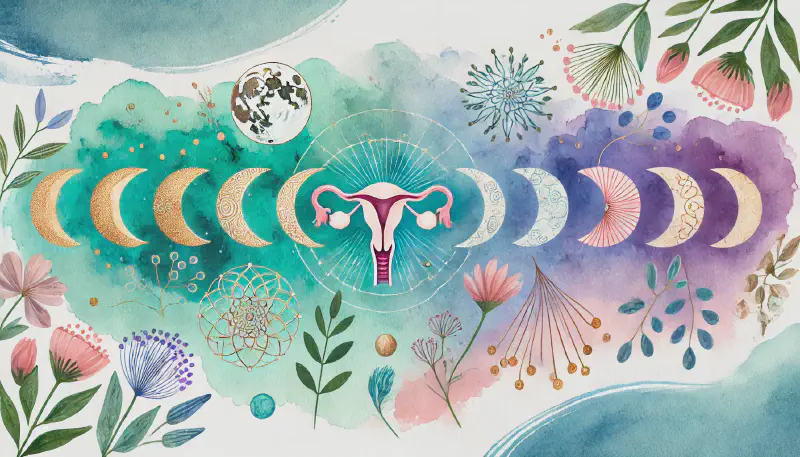
Your womb is your creative center. Not just for gestating children, but for gestating everything you bring into the world. It is the place where your deepest knowing lives, below thought, below language, in pure sensation and instinct.
In many indigenous and shamanic traditions, the womb is understood as a second brain. One that doesn’t process in logic but in images, in feeling, in deep body-knowing. It carries your personal history and the history of the women who came before you.
The uterus is an organ. The womb is a relationship.
You don’t have to choose between them#
Medical language has its place. When you are speaking with a gynecologist, “uterus” is the right word. Precision matters in clinical contexts.
But in your own inner life, in how you speak to yourself about your body, in how you approach your cycle, your fertility, your pain, your pleasure—the word you choose creates a different quality of attention.
Try it right now. Place a hand on your lower belly. Say quietly: my uterus. Observe what you feel.
Then say: my womb. Observe what changes.
If you want to go deeper into the connection with your womb, the Womb Wisdom Mini Guide is a gentle place to start. Free to download below.
Download Womb Wisdom Mini Guide
And if you are ready to go much deeper, working with your yoni and womb through somatic practice, breathwork, and body-based wisdom, that journey lives in the Yoni Egg Initiation Course.